



Protect Your Receipt of Support Payments with Life & Disability Insurance

Your divorce settlement will stipulate the amount and duration of alimony and/or child support you are entitled to receive. Life and disability insurance is what ensures you actually receive it, should the unexpected happen to your soon-to-be ex-spouse.

We help divorcing clients during their divorce negotiations, structure both correctly, with the right insurance carriers, the right ownership, and the right coverage amounts.

Why Do So Many Divorce Settlements Leave This Risk UnAddressed?

Most people treat divorce insurance as a detail to handle after everything else is settled, and unfortunately by that time it can easily fall through the cracks. After your Divorce Settlement Agreement is signed, the leverage to require proper coverage is gone. The paying spouse’s cooperation can no longer be made a condition of the settlement. The premium payment responsibility cannot be negotiated. The ownership structure cannot easily be altered, if at all.

The result is that millions of divorce agreements are legally binding on paper and financially unprotected in practice. If the paying spouse dies or becomes too disabled to work, your support payments will stop and you may have little or no recourse beyond going back to court, which cannot create money that is not there.
If you’ll be the recipient of alimony and/or child support payments, we’ll work with you and your divorce attorney to prevent that disastrous outcome. Our job is to get the right insurance in place, structured correctly, way before your settlement is finalized.

What Types of Insurance Are Used to Protect Support Payments in Divorce?

There are three types of coverage we structure for divorce-related obligations. Each protects against a different risk, and each requires a different approach to ownership, beneficiary designation, and coverage calculation.

Life Insurance for Alimony Obligations

Who should own the life insurance policy in a divorce?

You, as the receiving spouse, should own the policy whenever possible, not simply be named as the beneficiary. If your soon-to-be ex-spouse owns the policy, they can reduce coverage, stop paying premiums, or cancel it entirely without notifying you. Many receiving spouses do not discover the policy was canceled until after a death, when it is too late. Policy ownership gives you the ability to monitor the policy, confirm premiums are current, and prevent changes unless you make them as the policy owner. Where direct ownership is not possible, we work to establish irrevocable beneficiary status as the next best available protection, which would prevent your ex from changing or removing you as beneficiary without your signed written consent.

How does life insurance protect alimony payments?

A properly structured life insurance policy on the paying ex-spouse ensures that if they die, the present value of all remaining alimony payments is replaced with a lump-sum death benefit. The policy needs to be large enough to cover the full income stream you are owed over the entire term of the obligation, not just a few years.
Getting that number right requires accounting for every year of payments, any additional financial obligations your ex is required to honor, and the duration each obligation runs. In most cases there will only be one life insurance policy that covers all obligations together – alimony, child support, educational expenses, extracurricular activities, health insurance, and so on. We total the present value of each year’s obligation separately, since each year can be different.
Click Here to see how we calculate the amount of coverage needed.

Disability Insurance for Divorce Obligations

Why is including disability insurance in a divorce settlement more important than most people realize?

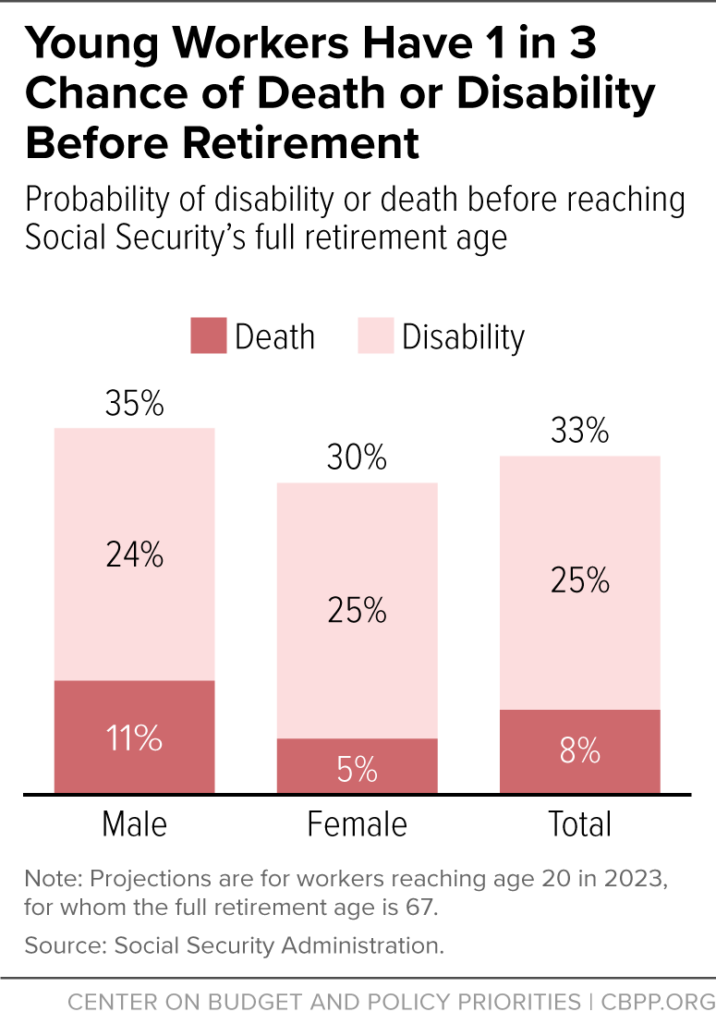
According to the Social Security Administration, a working person is statistically more likely to become disabled during their working years than to die. If the paying ex-spouse becomes unable to work due to illness or injury, they can petition the court to reduce, suspend, or eliminate their alimony and child support obligations entirely. Disability insurance is rarely included in Divorce Settlement Agreements, even though it almost always should be.
Private long-term disability insurance is portable and not tied to any employer. It also typically provides a more favorable definition of disability than the group workplace disability plans many people assume will cover them.

We help you and your attorney understand the options, the costs, and how to structure the requirements so your receipt of support is protected even if your ex-spouse can no longer work.

Life Insurance for Child Support Obligations

How is life insurance for child support calculated differently than for alimony?

Child support coverage requires a separate calculation for each child, running through the specific date of emancipation for that child (which is usually 18 or 21 depending on the State). It cannot be calculated as a single lump sum across multiple children with different end dates.
The coverage amount must account for every financial obligation tied to each child, including the base monthly support figure, private school and college expenses, health insurance, childcare, extracurricular activities, and any other child-related obligations that will be specified in the settlement. Each of those obligations has its own start and end date, and the coverage needs to reflect all of them accurately Click here to see how we calculate coverage.

Can you be named as the owner of a disability policy on your paying ex-spouse?

In most cases, insurance companies require that the insured person be both the owner and beneficiary of a disability policy. However, we work with a select group of A-rated carriers that will allow the recipient spouse to be named as owner and beneficiary of a disability policy on the paying ex-spouse. This level of protection is available to very few divorcing people because most insurance agents and divorce professionals do not know it exists.

What insurance information should be confirmed during your divorce negotiations?

Before any agreement can be reached, you should know whether the paying spouse is insurable at all, what amount of coverage is needed, what the needed coverage will actually cost, who will be responsible for paying the premiums, and how ownership and beneficiary designations will be structured. All of that information needs to be known as early as possible and incorporated into the agreement itself, not as a follow-up item after the divorce is done, when it might be too late.

We’ll provide that analysis during your settlement process so that your attorney has the facts needed to negotiate the right terms.

Court-Ordered Insurance Compliance

What does it mean when a divorce decree requires life insurance?

When a court order includes a life insurance requirement, it typically specifies a minimum coverage amount, a required policy type, a beneficiary designation, and documentation that must be provided to prove coverage is in force. The requirements vary significantly from one decree to another. Some are detailed and specific. Others include only a general obligation to maintain coverage without further guidance.
We review every court order we work with, identify every insurance-related requirement in detail, source policies that meet those exact specifications, and provide the documentation attorneys and courts need to confirm compliance.

When is the Right Time to Address Insurance in a Divorce?

The right time is during your settlement negotiations, before any agreement is finalized and signed. Because once your divorce is final, obtaining your paying ex-spouse’s cooperation might be difficult, if not impossible.

What If the Paying Spouse Cannot Qualify for Life or Disability Insurance?

Not every paying spouse will qualify. Age, health history, or financial factors can make coverage unavailable, cost-prohibitive, or insufficient for the full obligation amount. When that is the case, we’ll need to shift the conversation to alternative structures.
Those alternatives might include negotiating a larger upfront asset division or lump-sum payment for you in exchange for reducing or eliminating support payments. Another option could be the purchase of a Single Premium Immediate Annuity. This type of annuity creates a guaranteed* fixed monthly income for a defined term without depending on the paying spouse’s insurability or continued cooperation. We help with annuity solutions as well, which are covered in full on our Income Creation Service page.

How Is the Correct Amount of Life Insurance Coverage Calculated?

The death benefit needs to cover the total present value of every financial obligation the paying spouse has to you and your children, across the full term of each obligation. That includes the beginning and end dates of all of the following, if applicable:

Alimony payments, year by year, over the entire term of the obligation

Child support payments for each child through their specific date of emancipation

Health insurance and ongoing medical expense obligations

Child care costs through the dates specified in the settlement

Private school tuition and college expenses, extracurricular and activity-related expenses

Joint debt obligations, including any shared mortgage responsibility

You cannot purchase more coverage than your total potential financial loss. Performing this coverage calculation is a standard part of the services we will provide to you. In most cases, term life insurance is the most cost-effective structure. Policy terms are available in standard lengths of 10, 15, 20, 25, and 30 years, with some carriers offering terms in one-year increments beyond 10 years for more precise alignment with the duration of specific obligations.

Frequently Asked Questions

our services

Insurance Solutions Built for Divorce Settlements

We offer specialized insurance products designed to meet the exact requirements of divorce
decrees, marital settlement agreements, and court orders. Every policy is structured with
compliance, enforceability, and long-term protection as the foundation.

Life Insurance for Alimony

Alimony obligations often span years or even decades. In the event your paying ex-spouse dies, a properly structured life insurance policy would replace that income stream with a lump-sum payment. We help you secure policies with the right coverage amounts, durations, and beneficiary designations. Ideally, you as the recipient spouse would be named as the owner of the policy or, at the very least, the irrevocable beneficiary, providing you with direct control and preventing any unauthorized changes.

Life Insurance for Child Support

Children should never bear the financial consequences of a parent’s death. Life insurance for child support ensures that ongoing support payments are funded through the full duration of the obligation for each child, typically until the age of emancipation, which in most states is either 18 or 21. We calculate the correct amount of coverage needed based on the total amount of child support payments due for each child, plus any additional financial obligations such as private and religious schools, college, medical expenses, health insurance, child care, extracurricular activities, and more.

Court-Ordered Life Insurance Compliance

Many divorce decrees include specific language mandating that one or both parties maintain coverage. Courts may specify minimum amounts, policy types, beneficiary arrangements, and proof-of-coverage requirements. We review court orders, identify every insurance requirement, source compliant policies, and provide documentation that makes it easy to demonstrate compliance to attorneys and courts.

Disability Insurance Protection

Becoming disabled is statistically much more likely than dying during one’s working years. If the paying ex-spouse becomes disabled and can no longer earn income, alimony and child support payments are at risk. We help you or your soon-to-be ex-spouse secure private long-term disability insurance, which is portable and provides a more favorable definition of disability than employer group disability plans typically offer.

Unlike life insurance, most insurance companies require the insured to be both the owner and beneficiary of a disability insurance policy. However, there are a few A-rated insurance companies that will allow the soon-to-be ex-spouse receiving alimony and/or child support payments to be the owner and beneficiary of a disability insurance policy on their soon-to-be ex-spouse.

OUR PROCESS

How We Help You Secure the Correct Amount of Coverage

Our process is designed to be thorough, efficient, and aligned with the specific requirements of your divorce. From initial consultation to policy delivery, every step is guided by specialists who work exclusively in divorce-related insurance.

1

Consultation and Review

We begin with a confidential consultation to understand your situation and identify every insurance requirement.

2

Coverage Analysis and Recommendation

The financial obligations of the paying spouse need to be worked out during the divorce settlement negotiations. Once we know those terms, we can calculate the amount and term of the life insurance needed to cover all those financial obligations (disability insurance is based on the payor’s profession, income, age, health, and similar factors, so we do not need to calculate that separately).

We then present clear options from only A-rated or better insurance carriers with approximate premium payments, which could be adjusted up or down after underwriting and any required medical testing.

It is important that this is done during negotiations so you know:

  • Whether the paying spouse is insurable
  • How much the premiums will be
  • Who will pay those premiums
  • Who will own the policy

The insured’s cooperation is also required for completing the application, consenting to the insurance, and cooperating with any medical testing. Then the policy needs to be purchased and all the terms and conditions should be made part of the final Divorce Settlement Agreement.

3

Application and Underwriting

We manage the entire application process, coordinate medical exams if required, and work directly with underwriters to move your policy through approval as quickly as possible.

4

Policy Structuring and Beneficiary Setup

Policy ownership, beneficiary designations, and any irrevocability provisions should be determined as part of the negotiations prior to finalizing any settlement agreement or decree.

We help ensure these details are addressed early on so there are no surprises later in the divorce process or after the divorce is finalized.

CALCULATION

How We Calculate Coverage

A

Coverage Calculation

The life insurance death benefit amount should be determined by taking into account all of the following:

  • The amount of alimony payable each year over the entire term
  • The amount of child support payable each year to the age of emancipation for each child (which in most states is 18 or 21)
  • Any additional obligations your ex is required to pay each year (e.g., educational and college expenses, childcare, medical and healthcare expenses, joint debt including mortgages, etc.), all of which should be discussed and negotiated during the divorce process and incorporated into the final Divorce Settlement Agreement, including when each of those payments will start and end

You cannot purchase more coverage than your total potential financial loss as calculated above. We will handle that calculation for you.

In most cases, term life insurance is the least expensive option, and it is what we use in the vast majority of cases. The policy term should last until all of your ex’s financial obligations are fulfilled.

Most term life insurance policies have terms of 10, 15, 20, 25, and 30 years, and some can go beyond 30. There are also one or two A-rated insurance companies that offer terms in one-year increments after 10 years.

ALTERNATIVES

What Happens If Your Spouse Cannot Qualify for Life and/or Disability Insurance?

!

Alternative Options

If age, medical, or financial issues make insurance coverage impossible or too expensive, you should consider alternatives such as:

  • More assets or cash up front as part of your divorce settlement
  • Different support structures, such as a Single Premium Immediate Annuity, which will provide a guaranteed* fixed monthly income for the specified term (this is also something we can help you with)

GET STARTED

Protect Your Support Payments. Secure Your Future.

If you are in the middle of a divorce, now is the right time to address how you can protect your receipt of alimony and/or child support payments. We work with divorcing people and family law attorneys in all 50 states. There is no cost and no obligation for an initial consultation.

Everything on this website is for information purposes only and does not constitute legal and/or tax advice. If you require legal advice, consult with an attorney licensed in your jurisdiction and/or other appropriate professionals. The opinions expressed herein are solely ours, and we are not attorneys.

Scroll to Top